Red Raspberry Leaf Tea in Pregnancy: Evidence-Based Guide
You may have heard that red raspberry leaf tea in pregnancy can shorten labor or “tone” the uterus. It's one of the more commonly recommended herbal options among midwives and people preparing for childbirth. This guide explains what red raspberry leaf is, summarizes the best available research on its benefits and limitations, and provides practical, evidence‑based advice on timing, servings, safety considerations, and postpartum use.
You'll get clear, neutral guidance so you can decide whether you want to include this in your pregnancy.
What Red Raspberry Leaf Tea Is, Traditional Uses, And How It’s Prepared
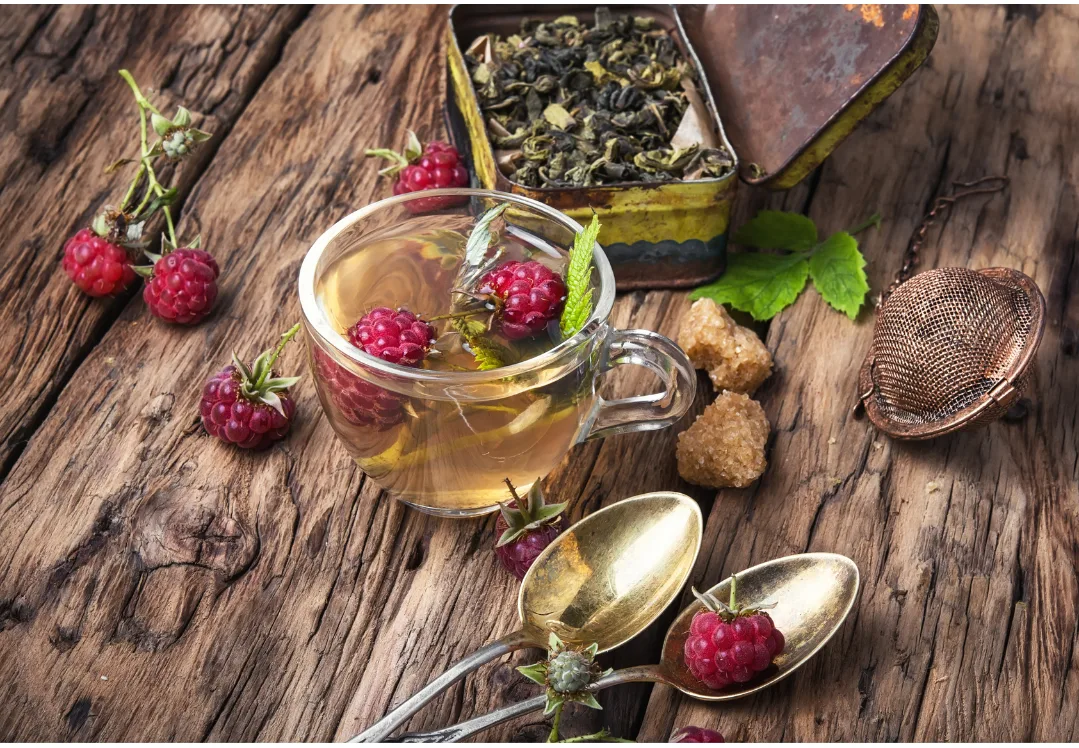
Red raspberry leaf tea is a herbal beverage made from the dried leaves of the red raspberry plant (Rubus idaeus). This is different from raspberry‑flavored tea or the fruit: the medicinal components come from the leaves. Traditionally, herbalists and midwives in Europe and North America have used the leaf for menstrual support, easing labor, and postpartum uterine recovery (1).
Traditional uses
- Uterine “toning”: Historically, the tea was thought to strengthen uterine muscles and improve the efficiency of contractions during labor.
- Labor support: Used in late pregnancy to prepare the body for birth and, anecdotally, shorten pushing time.
- Postpartum: Employed to ease cramping as the uterus involutes and to support recovery.
What's in the leaf
- Polyphenols and flavonoids: Plant compounds with antioxidant properties (2).
- Tannins: Bitter‑astringent compounds that can affect iron absorption if consumed in large amounts.
- Micronutrients: Trace amounts of minerals like iron, calcium, and magnesium are present, but the tea is not a reliable source for pregnancy‑level nutrient needs.
How it's prepared
- Basic infusion: Steep 1 teaspoon (about 1–2 g) of dried leaves or 1 teabag in 8 fl oz (240 mL) of boiling water for 5–10 minutes. Strain and drink hot or cold.
- Blends: Raspberry leaf is often combined with nettle, chamomile, or peppermint for flavor and complementary nutrients.
- Capsules/extracts: Available, but concentrated preparations differ from tea and have been studied less; use caution and consult your provider.
Practical note: Because herbal products are not regulated like pharmaceuticals, strength and purity vary between suppliers. If you choose prepackaged tea or capsules, use well‑labeled products and share details with your clinician.
Medical disclaimer: This section provides general information and is not individualized medical advice. Talk with your healthcare provider before starting any herbal product.
What The Research Shows: Potential Benefits, Effectiveness, And Limitations
Clinical research on red raspberry leaf in pregnancy is limited, and results are mixed. Most studies are small, vary in dose and form (tea vs tablets), and differ in timing of use. That makes it difficult to draw strong conclusions, but several consistent themes appear.
Potential benefits supported by available studies
- Shorter second stage of labor (3): Some randomized and observational studies report a modest reduction in the second stage (pushing phase) of labor, on average under 10 minutes in some trials, when raspberry leaf was taken in the weeks before birth. The clinical importance of this small difference is uncertain.
- Possibly fewer labor interventions (4): One small observational study and one randomized trial reported fewer interventions—including forceps or vacuum-assisted birth and artificial rupture of membranes—among people who used raspberry leaf. However, the differences in the randomized trial were not statistically significant, and the evidence has not been consistently confirmed in larger studies.
- No consistent change in overall gestation: Most studies show no difference in term vs preterm birth rates among users compared with nonusers, although sample sizes are often too small to detect uncommon risks.
Biological plausibility
Labor‑related effects may relate to constituents that influence uterine muscle contractility in lab models. Antioxidant polyphenols could also support cellular health, but translating laboratory findings to clinical outcomes in pregnancy remains speculative.
Limitations of the evidence
- Small sample sizes: Many trials include only a few dozen to a few hundred participants, increasing the chance that results reflect random variation.
- Heterogeneous dosing: Studies range from a daily cup to concentrated tablets at different milligram amounts; there's no standard therapeutic dose.
- Timing differences: Some studies start supplementation around 32 weeks, others earlier or later. Timing may affect outcomes.
- Confounding and recall bias: Observational reports and retrospective questionnaires can overstate benefits.
Bottom line on effectiveness
There is some evidence that red raspberry leaf taken in late pregnancy might modestly shorten the second stage of labor and may be associated with fewer assisted deliveries in particular studies. But, the overall quality of evidence is low to moderate: larger, standardized trials would be needed to confirm benefits and define optimal dosing.
Safety, Risks, Recommended Timing And Dosage, And Who Should Avoid It
Safety profile
Overall, red raspberry leaf appears low‑risk in published human studies when used in the second and third trimesters, with few reported adverse events. Commonly reported side effects are mild and uncommon: diarrhea, increased Braxton‑Hicks contractions, or gastrointestinal upset in isolated cases.
Potential risks to be aware of
- Preterm labor concern: Though no strong evidence links raspberry leaf to preterm birth, isolated reports exist. Because of this uncertainty, many clinicians advise starting no earlier than the second or third trimester and stopping if you experience contractions, bleeding, or other concerning symptoms.
- Iron absorption: Tannins in the tea can reduce nonheme iron absorption if consumed at the same time as iron‑rich meals or supplements. To reduce interaction, avoid drinking the tea within 1–2 hours of taking iron supplements or eating iron‑rich meals.
- Product variability: Supplements and extracts are less standardized than tea: concentrated forms may carry higher risk and have less safety data.
Recommended timing and typical serving guidance
- When to start: Many practitioners suggest waiting until after the first trimester (after 12 weeks) and commonly recommend beginning regular intake around 32 weeks for labor preparation. Others may allow starting in the late second trimester with clinician approval.
- Typical serving: A common, conservative approach is 1 cup (8 fl oz / 240 mL) daily to start, increasing gradually to 1–3 cups daily in the final weeks if well tolerated. One studied tablet dose equivalent was 2.4 g (2400 mg) with minimal adverse events reported. Exact dosing is not standardized.
- Avoid concentrated extracts while breastfeeding: Tea consumed in moderation (1–3 cups/day) is considered acceptable postpartum, but concentrated extracts are not recommended while breastfeeding due to limited data.
Who should avoid or use with caution?
- High‑risk pregnancies (placenta previa, preeclampsia, history of preterm labor), consult your OB/GYN or midwife first.
- People with iron‑deficiency anemia should separate tea from iron intake and discuss timing with their clinician.
- Anyone with a history of allergy to plants in the Rosaceae family should avoid it.
Medical disclaimer: This information is educational and not individualized medical advice. Always discuss herbal use with your prenatal care team before starting or changing intake.
Conclusion
Red raspberry leaf tea in pregnancy is a long‑used herbal remedy that may gently support uterine tone and, according to small studies, could modestly shorten the second stage of labor when taken in late pregnancy. Evidence is limited and mixed: benefits appear small, and safety data, while generally reassuring, are not comprehensive.
When to seek medical advice
- If you're considering red raspberry leaf tea, discuss it at your next prenatal visit, so your care team knows what you're using.
- Stop and contact your provider if you experience contractions, bleeding, unusual cramping, or any new symptoms after starting the tea.
Practical guidance (evidence‑based)
- If you choose to try it: wait until after the first trimester, start with 1 cup (8 fl oz / 240 mL) daily, and consider increasing to a maximum of 1–3 cups/day in the final weeks only with clinician approval.
- Avoid concentrated extracts while breastfeeding and separate tea from iron supplements or iron‑rich meals by 1–2 hours.
Before you try another labor prep aid, search it in the TPNL app. You’ll get the safety and effectiveness info in one place, instead of sorting through a pile of conflicting answers online.
Medical disclaimer: The Prenatal Nutrition Library blog and app provide general educational information only. This content is not a substitute for professional medical care, diagnosis, or treatment. Always consult your healthcare provider about your pregnancy and before starting or stopping any herbal product.
This Is What It Looks Like in the App
Search red raspberry leaf tea — or any food, herb, or supplement — and get the safety verdict in seconds. Try it below.
Red Raspberry Leaf Tea
What Is It
You might have heard that consuming red raspberry leaf tea during pregnancy can reduce the length of labor. You may wonder if this is safe, and if so, will it actually work?
Read on to learn more about raspberry leaf and see if it can actually reduce the duration of labor!
What is red raspberry leaf tea?
Red raspberry leaf tea is made from the dried leaves of raspberry plants. There are also capsules and extract forms of red raspberry leaf, which are also made from the dried leaves of the plant. It is important to note that this is not the same as raspberry flavored tea!
Red raspberry leaf has been used for centuries with a long history of traditional use among midwives and herbalists for menstrual support, labor preparation, and postpartum recovery…
Frequently Asked Questions
Will raspberry leaf bring on labor?
There's no evidence it induces labor. It's thought to prepare the uterus over time: it's not a reliable way to start labor on a given day.
Is it safe in the first trimester?
Most experts advise avoiding routine use in the first trimester because research is limited, and early pregnancy is a sensitive period.
Can it help with milk supply?
There's no strong clinical evidence that raspberry leaf alone increases milk production. Drinking tea can help with hydration, which supports breastfeeding.

Ryann Kipping
Licensed Dietitian & Founder of The Prenatal Nutrition Library
Prenatal dietitian with a Master's in Public Health and author of The Feel-Good Pregnancy Cookbook. Founder of The Prenatal Nutrition Library App.

Make pregnancy nutrition simple.
Get custom meal plans, 600+ dietitian-approved recipes, and our "Can I eat…?" search—plus, trimester-by-trimester nutrition priorities and more.