A gestational diabetes diagnosis can feel like a lot at once. You may be wondering what you can eat, whether carbs are "bad," and how to support your baby without making meals stressful. The good news: a well-structured GD diet plan can make day-to-day choices much clearer.
Gestational diabetes is high blood sugar first recognized during pregnancy. It happens because pregnancy hormones can make insulin work less effectively. That shift is common in pregnancy, but when your body can't keep up with the extra insulin demand, blood sugar rises.
Nutrition is usually the first step in treatment. A practical gestational diabetes meal plan focuses on steady meals, balanced carbohydrates, enough protein and fiber, and blood sugar monitoring, so you can learn what works for your body.
This article walks you through the basics, a 7-day sample plan, and what to expect during pregnancy and after delivery.
Gentle disclaimer
This article is educational and not a substitute for personal medical care. If you have gestational diabetes, symptoms of high or low blood sugar, or questions about your targets, contact your OB-GYN, midwife, diabetes care team, or registered dietitian.
What Gestational Diabetes Means And Why Nutrition Matters
Gestational diabetes mellitus, often shortened to gestational diabetes or GD, is a type of diabetes first recognized in pregnancy. In simple terms, your blood sugar runs higher than recommended because your body is having trouble using insulin effectively.
That doesn't mean you caused it. Pregnancy naturally increases insulin resistance due to placental hormones, changes in body composition, and shifting energy needs. Some people can make enough extra insulin to compensate (1). Others cannot, and that's when GD is diagnosed.
Why does nutrition matter so much? Because food has the most direct day-to-day effect on blood sugar, especially carbohydrate-containing foods.
A thoughtful meal pattern can help:
- keep glucose in your target range
- support your baby's growth
- lower the risk of very high or very low blood sugar swings
- support appropriate pregnancy weight gain
- reduce the chance of complications linked with poorly controlled GD
When gestational diabetes is not well managed, risks can increase for large birth weight, more difficult delivery, preeclampsia, newborn low blood sugar, and later type 2 diabetes risk for both parent and child (2). That sounds heavy, but it's also why steady, food-first care can be so meaningful.
How A Gestational Diabetes Meal Plan Helps Control Blood Sugar
A gestational diabetes meal plan provides structure to what can otherwise feel random. Instead of guessing, you use a repeatable pattern: balanced meals, planned snacks, and consistent carbohydrate intake spread across the day.
That matters because large gaps between meals or eating a lot of carbohydrates at once can make blood sugar harder to manage. For many people, smaller, more regular eating times work better than one big lunch or a carb-heavy dinner.
A practical GD diet plan usually aims to:
- spread carbohydrates evenly through the day
- pair carbs with protein and fat, ideally both
- include fiber-rich foods in every meal to slow digestion
- limit added sugar, especially from sugary drinks and concentrated sweets
- reduce large blood sugar spikes after meals
Many care teams recommend starting with 3 moderate meals and 2 to 3 snacks daily. Carb needs vary, but a common starting pattern is about 30 grams of carbohydrate per meal and 15 grams per snack, adjusted based on your blood sugar readings and your clinician's guidance.
Think of the meal plan as feedback-based nutrition. You eat, check your blood sugar as instructed, and look for patterns. Over time, you learn which breakfasts work best, how much fruit you tolerate, and whether your bedtime snack helps your fasting number the next morning.
The Core Building Blocks Of A Balanced GD Diet Plan
A balanced GD diet plan is not about cutting out every carbohydrate or eating "perfectly." It's about building meals that are more likely to support steadier blood sugar.
Carbohydrates, Protein, Fat, And Fiber: How To Balance Your Plate
Carbohydrates affect blood sugar the most, but they're also an important energy source in pregnancy. The goal is not zero carbs. The goal is to choose better carb sources, use realistic portions, and pair them wisely.
A simple GD plate model can help:
- 1/2 plate non-starchy vegetables: salad greens, broccoli, peppers, cucumbers, cauliflower, zucchini
- 1/4 plate protein: chicken, beef, turkey, eggs, tofu, fish low in mercury, beans, Greek yogurt
- 1/4 plate high-fiber carbohydrate: berries, kiwi, brown rice, quinoa, sweet potato, beans, lentils, whole-grain bread
A few practical guidelines:
- Choose high-fiber carbs more often than refined starches.
- Include protein at every meal and snack.
- Use quality fats like fatty fish, full-fat dairy, coconut milk/cream, avocado, nuts, seeds, olive oil, and nut butters to add staying power.
- Keep fruit portions moderate and spread them through the day.
Fiber will help slow the rise in blood sugar after meals. Protein and fat help too. That's why a piece of toast alone will spike you more than toast with eggs or nut butter.
Meal Timing, Snacks, And Portion Sizes For Better Glucose Control
Timing matters almost as much as food choice. Many people with gestational diabetes do better when eating every 2 to 3 hours, rather than skipping meals and getting overly hungry.
Helpful patterns often include:
- breakfast
- morning snack
- lunch
- afternoon snack
- dinner
- bedtime snack, if recommended
Breakfast can be tricky because insulin resistance is often higher in the morning. A lower-carb, higher-protein breakfast may work better than cereal, juice, or a large bowl of oatmeal.
Portion awareness matters too. One common carb-counting rule is that 15 grams of carbohydrate equals about 1 carb serving.
Examples of roughly 15 grams include:
- 1 slice bread
- 1 small tortilla
- 1/2 cup cooked rice or pasta
- 1/2 cup beans
- 1 small piece of fruit
- 1 cup milk (8 fl oz / 240 mL)
You don't need perfection. You do need consistency. And if your blood sugar targets aren't being met, your care team may help you adjust portions, food choices, or meal timing.
7-Day Gestational Diabetes Meal Plan
This sample gestational diabetes meal plan is a general educational example from the TPNL app, not a personal prescription. Carb tolerance varies, so use your blood sugar readings and your clinician's advice to tailor your plan to you.
7-Day Gestational Diabetes Meal Plan
Balanced, blood sugar-friendly meals you can repeat and adjust to your readings.
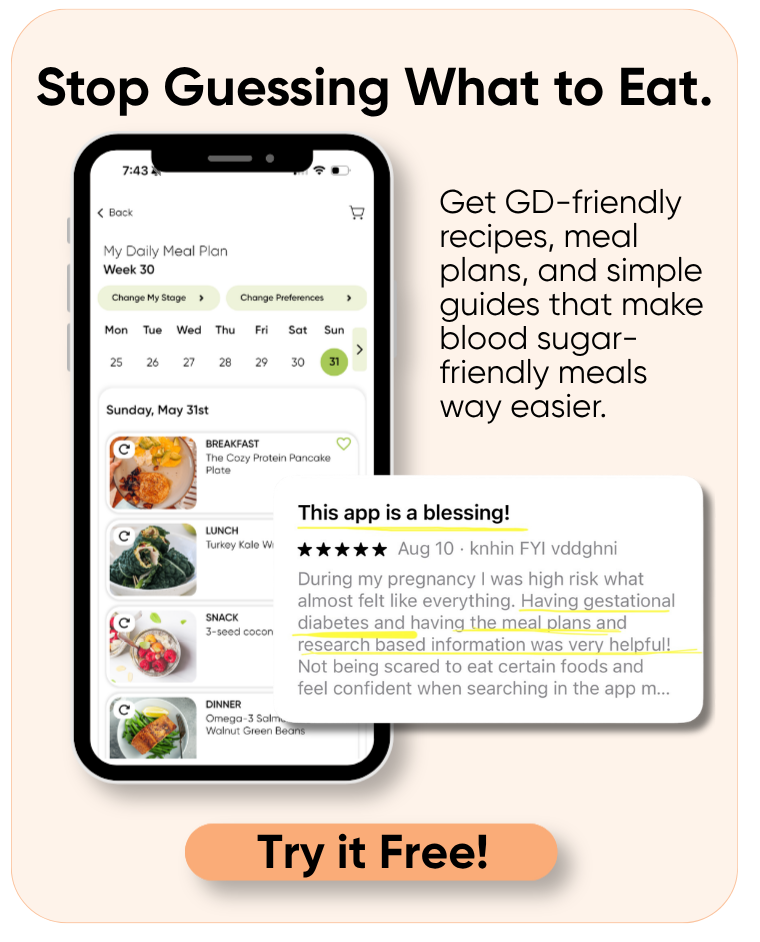
My Daily Meal Plan
Gestational Diabetes
Monday, May 25
Spaghetti Squash Frittata
Citrus Salmon Lettuce Boats
Brain Boosting Wraps
One Pot Creamy Chicken and Artichoke Stew
Antioxidant chocolate bark
A few notes:
- If breakfast numbers are high, reduce breakfast carbs and increase protein.
- If fasting blood sugar levels are high, ask your care team whether a bedtime snack might help.
- If you feel hungry soon after meals, add protein, fiber, or fat before adding more carbs.
- Keep beverages simple: water, sparkling water, or infused water, or unsweetened electrolyte mixes.
This kind of framework works because it is repetitive in a good way. You're not dieting. You're building a rhythm your body can respond to.
Foods And Drinks To Limit Or Avoid With Gestational Diabetes
With gestational diabetes, the biggest issue is usually not one specific food. It's regularly consuming the foods and drinks that deliver a lot of fast-digesting carbohydrates with little fiber, protein, or nutritional value.
Foods and drinks commonly limited include:
- soda, sweet tea, sports drinks, energy drinks
- fruit juice and juice blends
- pastries, donuts, cake, cookies, candy
- high-added sugar breakfast cereals
- white bread, white rice, and large portions of refined pasta
- syrups, jams, and sweetened coffee drinks
- dried fruit or canned fruit in syrup
These can raise blood sugar quickly, especially when eaten alone.
That said, "limit" does not have to mean panic. Sometimes a small portion can fit into a meal if the rest of the meal is balanced, but many people find these foods harder to incorporate into their meals during pregnancy with gestational diabetes.
Other important notes:
- Alcohol should be avoided during pregnancy.
- Caffeine is generally limited to about 200 mg per day, roughly 2 small cups of coffee, depending on preparation.
- Smoothies can be tricky because they are easy to drink quickly and may contain multiple servings of fruit.
A better swap list:
- whole fruit instead of juice because of fiber content
- plain oatmeal with collagen and nut butter instead of sweet cereal
- whole-grain toast instead of pastries
- sparkling water instead of soda
- berries and yogurt instead of ice cream more often
The goal is not to make food joyless. It's to make blood sugar more predictable.

Blood Sugar Monitoring, Exercise, And When Medicine May Be Needed
Food is central, but it is only one part of gestational diabetes care. Blood sugar monitoring helps you see how your meals, sleep, stress, and activity affect your numbers, as these factors all contribute.
Many people are asked to check:
- fasting blood sugar first thing in the morning
- 1 hour or 2 hours after meals
Common targets often include:
- fasting: under 95 mg/dL
- 1 hour after meals: under 140 mg/dL
- 2 hours after meals: under 120 mg/dL
Your own targets may differ, so follow your care plan.
Physical activity can help your muscles use glucose more effectively. If your pregnancy care team says it is safe, a simple option is to walk for 10 to 15 minutes after meals. Many pregnant women also aim for around 30 minutes of moderate activity most days, adjusted for comfort and medical guidance.
And sometimes, even with strong nutrition habits, medicine is still needed. That is not failure. Gestational diabetes is driven in part by placental hormones, and some bodies need more support than food and exercise alone can provide (3).
If your clinician recommends insulin or medication because your numbers remain above range, taking that advice can help protect both you and your baby.
Gentle disclaimer: If you have symptoms of very high blood sugar, low blood sugar, dizziness, vomiting, severe thirst, or reduced fetal movement, contact your healthcare team promptly.
What To Expect During Pregnancy, Birth, And After Delivery
With well-managed gestational diabetes, many women go on to have healthy pregnancies and healthy babies. Your prenatal team may monitor growth, blood sugar logs, and sometimes fetal well-being more closely than in an uncomplicated pregnancy.
During pregnancy, your plan may change. A breakfast that worked at 28 weeks may no longer work at 34 weeks. That can happen as insulin resistance increases later in pregnancy. It's frustrating, yes, but also normal!
At birth, your team will watch for issues that can be more common with GD, such as larger baby size, labor complications, or newborn low blood sugar. Good glucose control lowers these risks, though it cannot remove them entirely.
After delivery, gestational diabetes usually improves quickly because the placenta is no longer driving insulin resistance. But follow-up still matters. Having GD raises your future risk of type 2 diabetes and may increase metabolic risk later in life (4).
After birth, your care team may recommend:
- postpartum blood sugar testing
- ongoing primary care follow-up
- healthy eating and movement habits
- weight management support if needed
- screening before a future pregnancy
If you're planning another pregnancy someday, getting glucose and A1C checked ahead of time can be useful.
When to Seek Medical Advice
Contact your healthcare provider if:
- your blood sugars are repeatedly above your target range
- you have symptoms of low blood sugar or high blood sugar
- you cannot eat or drink normally due to illness
- you notice reduced fetal movement
- you have severe headache, vision changes, swelling, or other concerning pregnancy symptoms
Join the TPNL app for a weekly gestational diabetes friendly meal plan.
Conclusion
A practical GD diet plan is less about restriction and more about the consistent pattern: regular meals, balanced carbs, enough protein and fiber, and learning from your blood sugar readings. For many women, that structure supports steadier blood glucose levels, better energy, and a more confident path through gestational diabetes.
Start with food first, monitor your response, and stay flexible. If medicine becomes part of your care, it can work alongside nutrition, not against it. The most effective gestational diabetes meal plan is one you can follow and adjust with your healthcare team.
Gestational Diabetes Diet Plan FAQs
Can you eat carbs with gestational diabetes?
Yes. Carbohydrates are usually included, but the type, portion, and timing matter.
What is a good breakfast for a GD diet plan?
Many people do well with a higher-protein breakfast, such as eggs, Greek yogurt, or tofu, paired with a high-fiber carbohydrate like berries or potatoes.
Do you always need insulin for gestational diabetes?
No. Some people manage with nutrition and activity alone, while others also need medication.
What is a GD diet plan and why is it important during pregnancy?
A GD diet plan is a structured eating approach for gestational diabetes that balances carbohydrates, protein, fiber, and meal timing to maintain blood sugar in target ranges and support healthy fetal growth and pregnancy outcomes.
How should carbohydrates be managed in a gestational diabetes meal plan?
Carbohydrates should be spread evenly throughout the day, focusing on high-fiber sources such as legumes and vegetables, with moderate portions of fruit. Pair carbs with protein and healthy fats to reduce blood sugar spikes.
What does a typical day look like on a 7-day gestational diabetes meal plan?
A typical day includes 3 small-to-moderate meals and 2-3 snacks, with balanced carbs (~30g per meal, ~15g per snack), along with non-starchy vegetables, protein like chicken or fish, healthy fats, and fruit or starchy vegetables.
When might medication be necessary for managing gestational diabetes?
If blood sugar targets are not met through nutrition and activity alone, a healthcare provider may recommend insulin or other medications to protect both mother and baby, as GD is influenced by placental hormones and insulin resistance.
If you need more personalized support, consider joining the TPNL app or applying for private nutrition coaching with Ryann.
Questions about gestational diabetes? Need support?
Go to "Ask an RD" (search it or post your question there), book a 60-minute nutrition consultation, or book a Quick Question Call
Start Free Trial
Ryann Kipping
Licensed Dietitian & Founder of The Prenatal Nutrition Library
Prenatal dietitian with a Master's in Public Health and author of The Feel-Good Pregnancy Cookbook. Founder of The Prenatal Nutrition Library App.